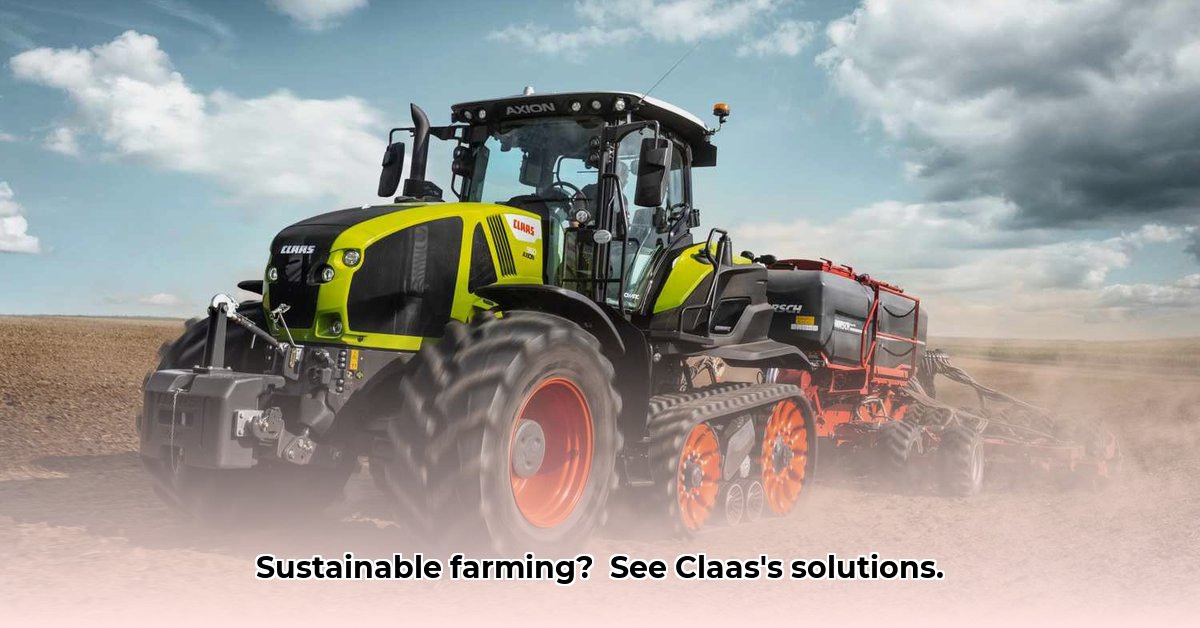
Claas tractors are a familiar sight in fields worldwide, known for their reliability and performance. But as sustainable farming practices gain prominence, how do these workhorses stack up? This article explores Claas tractors' capabilities, assesses their sustainability profile, and highlights the need for greater data transparency within the agricultural machinery industry. For more on sustainable tractors, see this resource.
Understanding Claas Tractors and Their Capabilities
Claas offers a diverse range of tractors and combine harvesters, catering to farms of all sizes. Smaller models excel in precision tasks like planting, while larger machines are built for large-scale harvesting. Many farmers praise their ease of use and operator comfort, crucial factors impacting productivity and farmer well-being. A happy, healthy farmer is essential for sustainable farming. However, while anecdotal evidence suggests efficient design and powerful engines, quantifiable data on their environmental impact remains limited. This lack of data hampers a full assessment of their sustainability.
Shining a Light on Sustainability: What We Know and What We Don't
Detailed, verifiable data on the environmental footprint of Claas tractors is surprisingly scarce. Crucial information on fuel consumption, greenhouse gas emissions, and lifecycle impacts is missing. This isn't necessarily a reflection on Claas' commitment to sustainability, but rather underscores a broader industry challenge: the urgent need for standardized, transparent measurement of agricultural machinery's environmental impact. This lack of data prevents a robust comparison with competitors.
While the robust build suggests longevity—a positive for sustainability—we need verifiable data on lifespan and repairability. Furthermore, the manufacturing processes, including energy and resource consumption, and end-of-life disposal methods, require detailed analysis. Operator comfort, while beneficial, is only one aspect of a comprehensive sustainability assessment.
The Need for More Data: A Call for Collective Action
The lack of comprehensive sustainability metrics affects the entire agricultural machinery industry. A multi-pronged approach involving manufacturers, farmers, policymakers, and researchers is crucial.
- Claas and other manufacturers: Should proactively publish comprehensive sustainability reports, including lifecycle assessments (LCAs). Independent verification would build trust.
- Farmers: Should demand detailed fuel consumption and emissions data when purchasing equipment. This direct pressure can encourage transparency.
- Policymakers and NGOs: Should implement stricter emission standards and provide incentives for sustainable designs, such as subsidies or regulations. Support for independent LCAs is also vital.
- Researchers: Need to develop standardized metrics for measuring the sustainability of agricultural machinery, creating a comparable framework for evaluation.
A Path Forward: Actionable Steps Toward a Greener Future
The transition to sustainable farming requires collaborative efforts. Addressing the data gap is essential. The following table outlines a framework for achieving a greener future in agriculture:
| Stakeholder | Short-Term Actions (0-1 Year) | Long-Term Actions (3-5 Years) |
|---|---|---|
| Farmers | Request detailed fuel consumption and emissions data; explore fuel-efficient practices. | Invest in precision agriculture; consider equipment leasing. |
| Claas | Publish comprehensive sustainability reports, including LCAs; improve manufacturing transparency. | Develop sustainability certifications; collaborate on improved environmental performance and design. |
| Policymakers/NGOs | Implement stricter emission standards; encourage renewable energy in farming. | Define Environmental Performance Indicators (EPIs); invest in R&D of sustainable technologies. |
How to Compare Claas Tractor Fuel Efficiency with Competitors for Sustainable Farming
Fuel efficiency is vital for both profitability and environmental responsibility. Direct comparisons between Claas and competitors are difficult due to inconsistent reporting standards. Sustainable farming encompasses operational practices and the tractor's entire lifecycle. Farmers need transparent data for informed decisions. Technological advancements like precision farming can improve efficiency, but their impact needs clear quantification.
The Challenge of Comparison: A Lack of Standardized Metrics
Comparing Claas tractors' fuel efficiency directly to competitors is difficult due to the lack of universally accepted testing standards. Manufacturers often report data differently, making direct comparisons inaccurate.
Focusing on the Bigger Picture: Sustainability Beyond Fuel
Sustainable farming involves more than fuel economy. Consider operational practices (integration with precision farming), lifecycle analysis (production, disposal), and alternative fuel compatibility. These factors are crucial for a thorough sustainability assessment.
Gathering the Data: Where to Start
To compare Claas tractor fuel efficiency effectively:
- Seek independent testing: Look for reports from unbiased sources.
- Consult farmer reviews: Online forums and agricultural publications offer real-world insights.
- Examine manufacturer specifications: While not directly comparable, this offers a starting point.
- Look beyond the manufacturer: Contact agricultural research organizations or universities.
Actionable Steps for Farmers and Manufacturers
Farmers need accessible, comparable data. This encourages manufacturers to adopt standardized testing and transparency. Policymakers should promote standards and incentivize sustainable farming practices.
Looking Ahead: A Collaborative Approach for Sustainable Agriculture
The journey to sustainable farming necessitates collaboration. The absence of comprehensive data highlights the need for transparency, research investment, and collaborative efforts to ensure agriculture is both productive and environmentally responsible.